
Dental Charting for Beginners: The Ultimate UK Guide

By the way
We built AI Dental Notes to make this article unnecessary.No typing pocket depths. No memorising notation. Speak naturally — the AI handles the rest.
We’ve all been there. It’s the end of a long clinic day, the last patient has left, and you’re faced with the essential, yet often arduous, task of completing your clinical records. Accurate dental charting isn’t just clerical busywork; it’s the bedrock of patient care and your professional protection.
However, traditional charting can be a major source of friction in a busy practice. Whether you're using manual techniques or clicking through clunky software, the process is time-consuming. Errors are surprisingly common and can carry significant clinical and medico-legal risks.
At Dentistry Dashboard, we understand these pressures intimately. This was a challenge our founder, Dr. Stevie, faced daily in his own practice—and it’s what led him to create a solution.
This guide is designed to be the definitive resource for UK dental professionals—dentists, students, therapists, hygienists, and dental nurses. We’ll break down the systems, symbols, and strategies for mastering UK dental charting to ensure accuracy, compliance, and efficiency in your practice.
Dental charting is the standardized process of recording the health status of a patient's teeth and periodontal tissues. It’s a graphical and textual map of the mouth, forming a critical part of the patient's permanent clinical record.
A comprehensive tooth chart goes beyond just noting cavities. It includes:
- Existing restorations and their materials
- For those approaching dental charting for beginners, it’s crucial to understand this is not merely administrative work. It is both a clinical necessity and a legal document.
- The importance of meticulous record-keeping cannot be overstated. The UK’s General Dental Council (GDC) mandates that dentists “make and keep contemporaneous, complete and accurate patient records.”Read the full GDC guidance.
Accurate charting serves three primary functions:
Clinical Continuity of Care
Ensures a seamless handover between clinicians, preventing missed diagnoses and treatment errors.
Medico-Legal Necessity
In the event of a patient complaint, your clinical records are your first and best line of defence. The well-worn maxim holds true: “If it isn’t written down, it didn’t happen.”
Compliance and Audits
Regulatory bodies like the GDC and CQC place heavy emphasis on the quality of clinical records during practice audits.
To communicate effectively, we need a standardized way to identify specific teeth. In the UK, this primarily relies on Palmer Notation.
This system divides the mouth into four quadrants (UR, UL, LL, LR) and numbers permanent teeth 1–8 from the midline. It is the system most commonly taught and used in UK general practice.
The FDI two-digit system is used internationally and by most modern practice management software. The first digit is the quadrant (1–4) and the second is the tooth (1–8).
As Dr. Stevie found in his practice, the mental load of constantly translating clinical findings into precise notation is taxing. That’s why we designed AI Dental Notes to understand dental context. You simply say “Upper Right Six”, and the system knows exactly how to notate it according to your preference (Palmer or FDI).
Beyond tooth identification, dentists use a vast array of symbols and abbreviations to describe conditions and treatments.
Caries
Often marked in red, noted by surface (O, M, D, B, L/P) Restorations: Noted by material (Amalgam, Composite, etc.) and surfaces (e.g., MOD)** Missing Teeth:** Marked with a horizontal line or "X"
With Dentistry Dashboard Notes, you can describe the condition naturally—e.g., “Large MOD composite on the LL7 with distal marginal breakdown”—and our AI structures it accurately using standardized terminology.
Periodontal health recording is a mandatory component of the dental exam, guided by the British Society of Periodontology (BSP). See BSP’s Good Practitioner’s Guide.
TheBasic Periodontal Examination (BPE) is the standard screening tool. The mouth is divided into six sextants, and the highest code (0–4, with * for furcation) is recorded.
When a BPE score of 3 or 4 is recorded, a more detailed 6PPC is required, measuring six sites per tooth. Recording a full 6PPC is notoriously time-consuming and prone to transcription errors.
This is where AI transforms the workflow. With our software, you simply vocalize the readings as you go—“LL6, buccal 4, 3, 5, bleeding”—and the AI captures and structures the data instantly.
Artificial Intelligence is not about replacing clinical judgment; it’s about removing the administrative burden so you can focus on your patient.
Our system uses specialized dental AI to transcribe your appointment conversation and intelligently structure it into coherent, compliant clinical notes.
Natural Language Input
Speak naturally about your findings. No rigid commands.
Automatic Notation
The AI understands and applies Palmer or FDI notation correctly.
Intelligent Filtering
Filters out irrelevant small talk, capturing only clinical data.
Consistency and Compliance
Notes follow standardized templates, ensuring every required detail is captured.
This technology allows clinicians to chart faster, more accurately, and with significantly less stress.
Mastering dental charting is a fundamental skill. While traditional methods have served us well, they are inefficient. By embracing AI, we can ensure the highest standards of record-keeping while reducing burnout and freeing up time for what matters most—our patients.
Spend less time typing and more time treating. Dentistry Dashboard Notes is helping UK dentists save hours every week, improve the quality of their records, and reduce administrative stress. 👉 Learn more and start your 14-day free trial today.
Dr. Stephen Nkansah
You just read 10 minutes on how to do this manually.We made the manual bit optional.
AI Dental Notes listens during the consultation, structures the clinical record, generates referral letters and consent forms, and fills the perio chart by voice. You stop typing. You stop memorising. You finish on time.
Voice charting
Speak measurements as you probe. The 6PPC fills itself in real time.
Notation handled
Say “upper right six” — Palmer or FDI is written correctly into the record.
One conversation
Notes, referral letters, consent forms, treatment plans — all from the same recording.

About Dr Stephen Nkansah
UK-registered dentist (GDC) and founder of Dentistry Dashboard. Built the platform after experiencing first-hand the documentation burden of UK dental practice — the AI Notes, voice perio charting, and bundled clinical workspace are the tools he wished he’d had as an associate.
Read the founder story →Related CPD courses
Endodontics courses for UK dentists
Dates, CPD hours and prices from UK providers, compared on the Dentistry Dashboard course directory.
Simplifi Composite (The Original)
Composite bonding is one of the most in-demand cosmetic skills in modern dentistry, and this two-day hands-on course from Simplifi teaches a simplified.
Course provider
Simplifi Composite
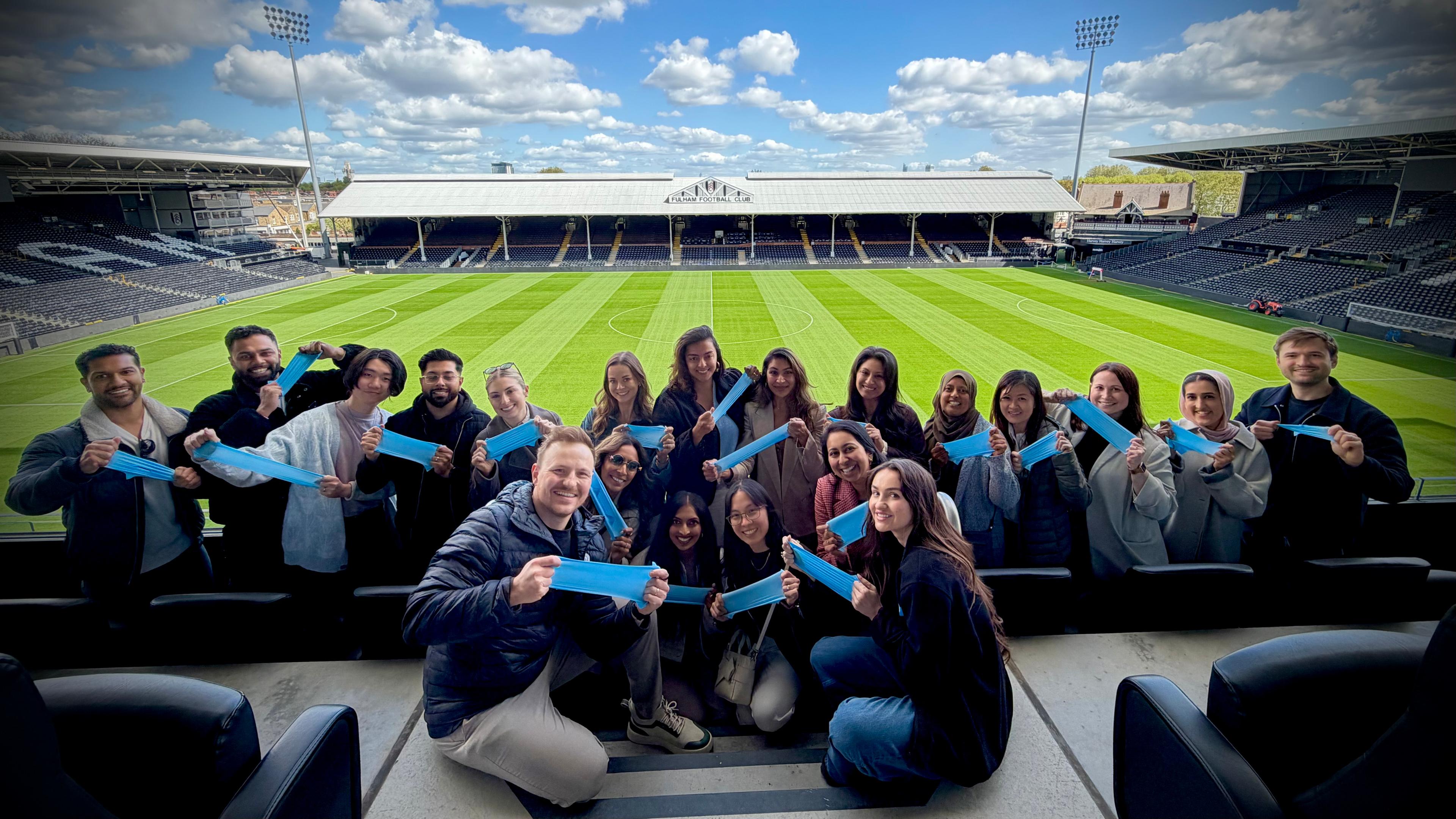
PUNCH | The Hands On Rubber Dam & Matrixing Course
The one day intense rubber dam and matrixing course | Hosted at Craven Cottage In London
Course provider
Wiktor Pietraszewski
Composite Bonding Course (2-Day Hands-On)
This two-day hands-on course from DENTER, held at a central London venue in Bloomsbury, concentrates on building genuinely usable composite bonding.
Course provider
Denter
Related Articles
Palmer Notation Charting Symbols: A UK Dentist's Cheat Sheet
The complete reference to Palmer notation - the UK-standard tooth numbering system - plus the charting symbols you'll see on every dental chart, with examples and a downloadable cheat sheet.
Read more →UK Dental Charting Symbols Cheat Sheet (2026)
A complete printable reference of UK dental charting symbols: restorations, surfaces, missing teeth, BPE codes, plaque scores, mobility grades, and the colour conventions used on most UK paper and digital charts.
Read more →BSP Staging and Grading Cheat Sheet (2026): Periodontitis Diagnosis in 60 Seconds
The BSP implementation of the 2017 World Workshop classification, simplified into a one-page reference. Stage I-IV, Grade A-C, MPS, MBS, engagement, and stability - with worked examples.
Read more →